Forging Reality — Rebranding LA 2028 with Generative AI
Author: Amit Gaur Date: Nov 30 Read Time: 5 Minutes
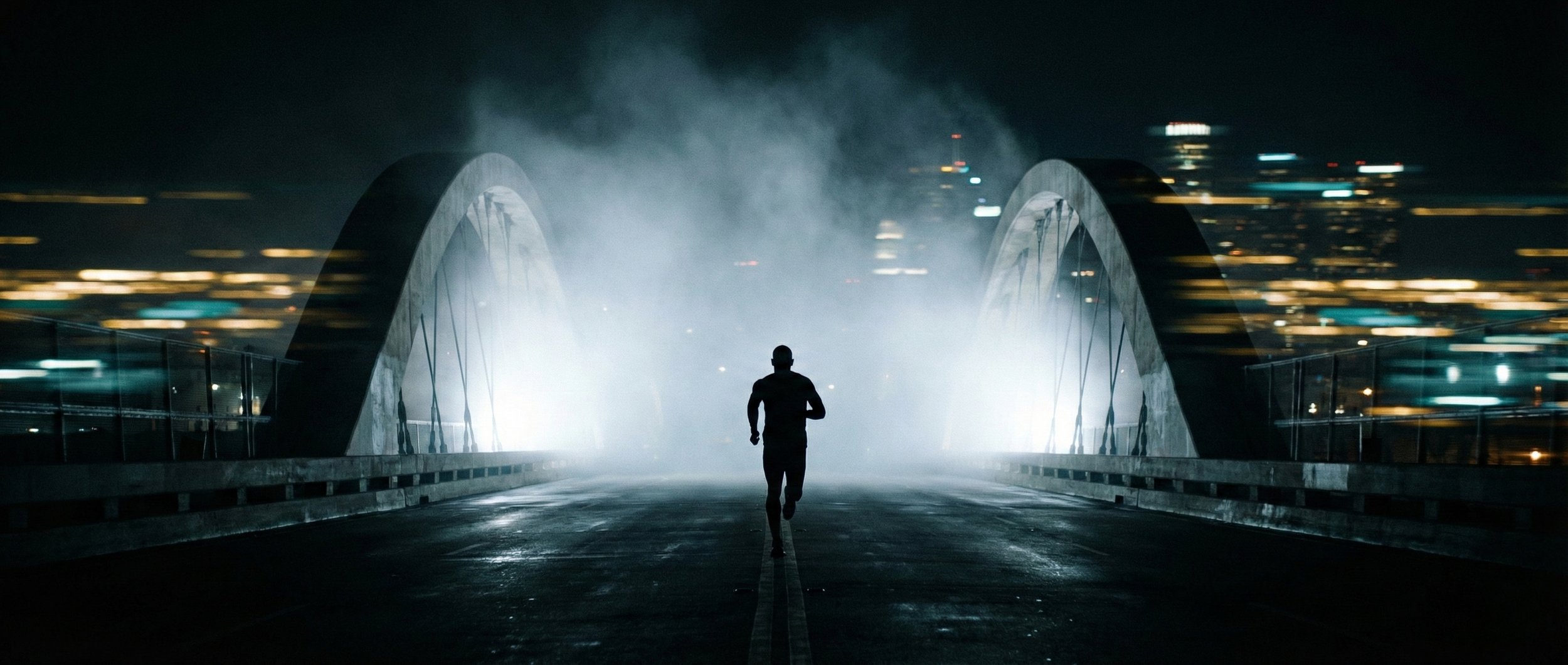
Project Snapshot
Project: "Make It Real" — LA 2028 Brand Anthem
Role: Creative Director & AI Design Lead
Timeline: 48 Hours
Tools Stack: Gemini (Strategy), Nano Banana Pro (Visuals), Super Grok (Motion), ElevenLabs (Audio), Premiere Pro.
1. Executive Summary
In the crowded landscape of sports marketing, "inspiration" has become a commodity. For the LA 2028 Olympics, the challenge was to cut through the noise of traditional "sun and surf" travel ads to reveal the city’s true competitive soul.
Using a custom multi-model AI workflow, I directed and produced "Make It Real"—a 60-second broadcast-quality brand film. This case study breaks down how I orchestrated a suite of AI tools to pivot the city's identity from "Hollywood Plastic" to "Cinematic Grit," achieving a tactile, high-fidelity aesthetic entirely through generative means.
2. The Strategic Pivot
The Problem: Global perceptions of Los Angeles are stuck in stereotypes: plastic culture, movie magic, and lazy sunshine. This narrative is fatal for a sports brand, which relies on authenticity and struggle.
The Insight: The "fakeness" of LA is actually a competitive filter. If you can survive the distractions, the traffic, and the illusions, you are harder than anyone else.
The Solution: "The Anti-Gloss Aesthetic" — A creative direction that rejects the saturated, polished look of typical AI video. Instead, it focuses on high-contrast realism, imperfections, and weight.
Visual Tone: Desaturated, deep shadows, textural film grain (IMAX 70mm style).
Narrative Arc: Acknowledging the criticism ("They say we're soft") and weaponizing it into a statement of power.
3. The Workflow: From Syntax to Cinema
Unlike standard workflows that rely on a single tool, I utilized a "best-in-class" modular stack, treating each AI model as a specialized department head (Writer, DP, Animator, Sound Engineer).
Step 1: The Blueprint (Gemini)
Role: Creative Strategist & Screenwriter
The Process: I used Gemini not just for copy, but for visual reverse-engineering.
Strategic Reasoning: We explored varied tones (e.g., "Upbeat Tourist" vs. "Gritty Noir"). Gemini identified that the "Gritty Noir" angle offered the strongest brand differentiation against the "Make It Real" concept.
Prompt Architecture: I used Gemini to write the lighting scripts for the image generator. We co-authored complex instructions using terms like "chiaroscuro," "rim-lighting," and "volumetric fog" to ensure the visuals would look grounded, not synthetic.
Step 2: The Cinematography (Nano Banana Pro)
Role: Director of Photography
The Process: Standard AI models often produce a "plastic sheen." I used Nano Banana Pro specifically for its ability to handle complex texture.
The Challenge: Maintaining a consistent, non-digital look.
The Fix: I engineered prompts focusing on tactile imperfections—sweat, concrete dust, rust, and marine layer fog. This forced the model to render "dirty" textures that subconsciously signal reality to the viewer. These "Hero Stills" served as the visual anchors for the film.
Step 3: The Motion Synthesis (Super Grok)
Role: Motion Director
The Process: Static images don't sell emotion; movement does. I fed the hero stills into Super Grok to transform them into video.
Technique: Instead of generic "morphing," I directed Super Grok to emulate specific cinematic camera moves (e.g., "slow tracking shot forward," "dutch angle tilt").
The Result: This transformed the Nano Banana Pro stills into living cinematics, adding environmental movement (fog swirling, lights flickering) that grounded the footage in physical space.
Step 4: The Sonicscape (ElevenLabs)
Role: Sound Design & Scoring
The Process: A film lives or dies by its audio. I used ElevenLabs to build an immersive sonic atmosphere.
Voice Over (Speech-to-Speech): A standard Text-to-Speech input felt too robotic. I acted the script into a microphone to capture the specific human cadence—the pauses, the tired breaths, the whispers. The AI then mapped a "Deep Narrative" voice model onto my performance, retaining the human imperfection.
SFX Generation: I generated diegetic textures—the specific "hiss" of a boxer's breath, the "hum" of stadium lights—to create a 3D soundstage.
Step 5: The Final Cut (Adobe Premiere Pro)
Role: Editor
The Process: AI creates the assets, but Human intuition creates the story.
Pacing: The edit was cut strictly to the audio track's "heartbeat" (a sub-bass pulse).
Grading: I applied a final adjustment layer to unify the color space of the Super Grok clips, ensuring the blacks were crushed and the highlights were blown out just enough to match the "Anti-Gloss" direction.
4. Technical Appendix: Iterative Prompt Log
A look under the hood at how the "Money Shots" were engineered.
Shot A: The "Lonely Surfer"
Goal: Establish the "Anti-Sunshine" mood. Cold, isolated, dangerous.
[INSERT IMAGE: Split screen showing a bad AI image vs your Final Surfer image]
❌ Prompt v1 (The Failure):
"A surfer sitting on a surfboard in the ocean at Los Angeles beach. Foggy morning. Cinematic shot. Realistic."Why it failed: The AI defaulted to a "golden hour" travel ad vibe. The water was tropical blue, and the fog looked like a gentle mist. It lacked weight.
✅ Prompt v2 (The Final Polish):
"Cinematic film still, wide shot. Venice Beach at dawn. Thick, practical marine layer fog obscures the horizon. A lone surfer in a dark wetsuit sits on a longboard staring at a massive, churning dark wave. Desaturated deep blues and grays. Heavy film grain, volatile weather, moody atmosphere. Shot on IMAX 70mm, 35mm lens. --no sun, orange, bright colors"Why it worked: "Practical marine layer" forced volumetric density. Negative prompting "--no sun" killed the warmth.
Shot B: The "Defying Gravity" Skater
Goal: Turn a street skater into a superhero. Vertigo and scale.
[INSERT IMAGE: Split screen showing a bad AI image vs your Final Skater image]
❌ Prompt v1 (The Failure):
"A skateboarder doing a jump in a bowl. Blue sky background. Cool angle. Action shot."Why it failed: Standard eye-level angle. The lighting was flat "high noon" shadowless light, making it look like a video game screenshot.
✅ Prompt v2 (The Final Polish):
"Extreme low-angle 'worm’s eye' view from the bottom of a concrete skate bowl. A skateboarder is launching massive air directly over the camera lens. Silhouette against a deep blue, cloudless sky. The sun is flaring directly behind the skateboard deck (rim light). 16mm gritty film stock, motion blur on wheels. The shot feels dangerous and vertical."Why it worked: "Worm's eye view" forced the perspective. Placing the sun behind the subject (rim light) created a silhouette, hiding AI facial artifacts and adding drama.
Shot C: The "City of Stars"
Goal: A visual metaphor for "Becoming the stars."
[INSERT IMAGE: Your final City of Stars image]
❌ Prompt v1 (The Failure):
"Athlete on roof looking at city lights. Lights look like stars."Why it failed: Resulted in a fantasy image with floating magical sparkles. It broke the realism of the film.
✅ Prompt v2 (The Final Polish):
"Epic wide shot from the edge of a skyscraper helipad in Downtown LA at night. An athlete stands in silhouette. The city grid below is razor-sharp, glittering like a galaxy of gold and teal stars in a deep black void. Crystal clear air, no fog. Cyberpunk noir atmosphere, anamorphic lens flares, high contrast. --ar 16:9 --stylize 750"Why it worked: Describing the grid as a galaxy anchored the metaphor in reality. "--stylize 750" pushed the artistic composition over literal photorealism.
5. Key Takeaways for Brand Leaders
Style Over Scale: AI can generate infinite images, but without a strict Art Direction (like the "Anti-Gloss" aesthetic), it’s just noise. You must define the rules of your universe before you prompt.
The "Uncanny Valley" Solution: The biggest tell for AI video is lack of texture. By leaning into film grain, silhouettes, and extreme weather, we mask the digital imperfections and increase emotional resonance.
Sound is the Glue: High-fidelity visuals with stock robotic audio will always feel "cheap." The "Human-in-the-Loop" audio workflow is the single biggest ROI activity in AI video production.
